
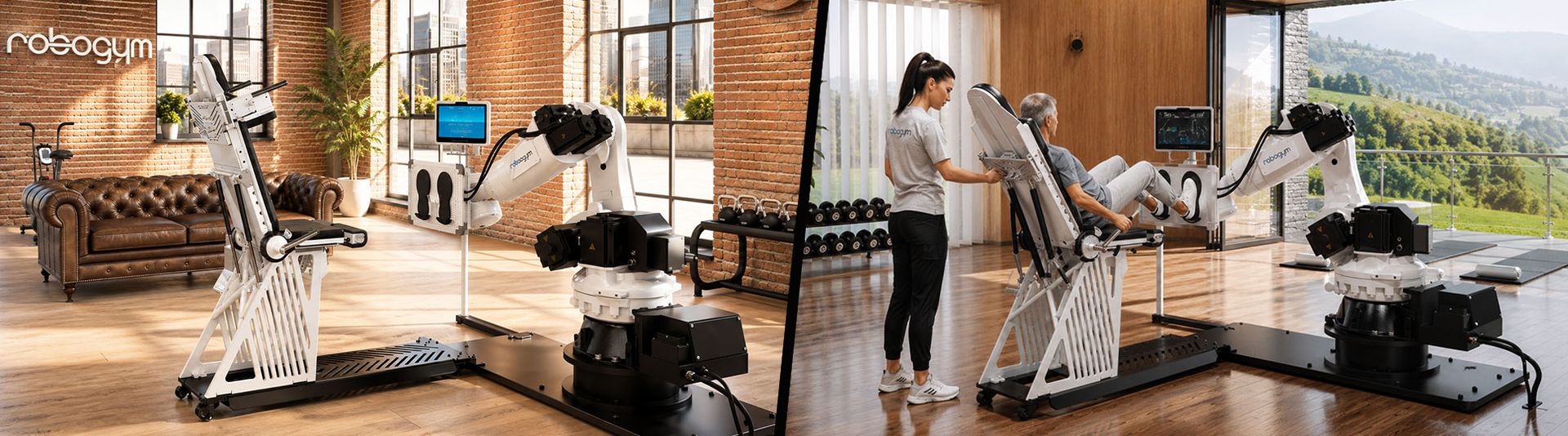
Conventional strength-training equipment typically relies on predefined resistance characteristics and a limited number of manually adjustable settings. RoboGym is a robotic training system developed by BEC Robotics together with the German Sport University Cologne that takes a different approach: a robotic arm replaces the fixed resistance mechanism, allowing movement and resistance to be configured for the individual using the system rather than fixed in advance. In this context, individualized training means that an exercise is set up around a person’s current physical capability rather than a standard setting shared by all users. The project combines BEC’s robotics engineering with sports-science and biomechanics expertise from the German Sport University Cologne.
Personalized Strength Training Through Robotics
Conventional strength-training machines typically operate with predefined resistance characteristics and a limited set of adjustable parameters. While this approach is suitable for many training applications, it offers limited flexibility when training parameters need to reflect individual physical capabilities. RoboGym replaces the fixed resistance mechanism with a robotic arm. Because the arm’s movement and resistance are softwar e-controlled rather than mechanically fixed, they can be configured for each user and adjusted between sessions or during a session. This configurability distinguishes a robotic training system from a mechanically adjustable machine, where the range of possible settings is limited by the machine’s construction. A robotic arm can be reconfigured across a wide range of movement patterns and resistance profiles without physical modification.
How the RoboGym Training System Works
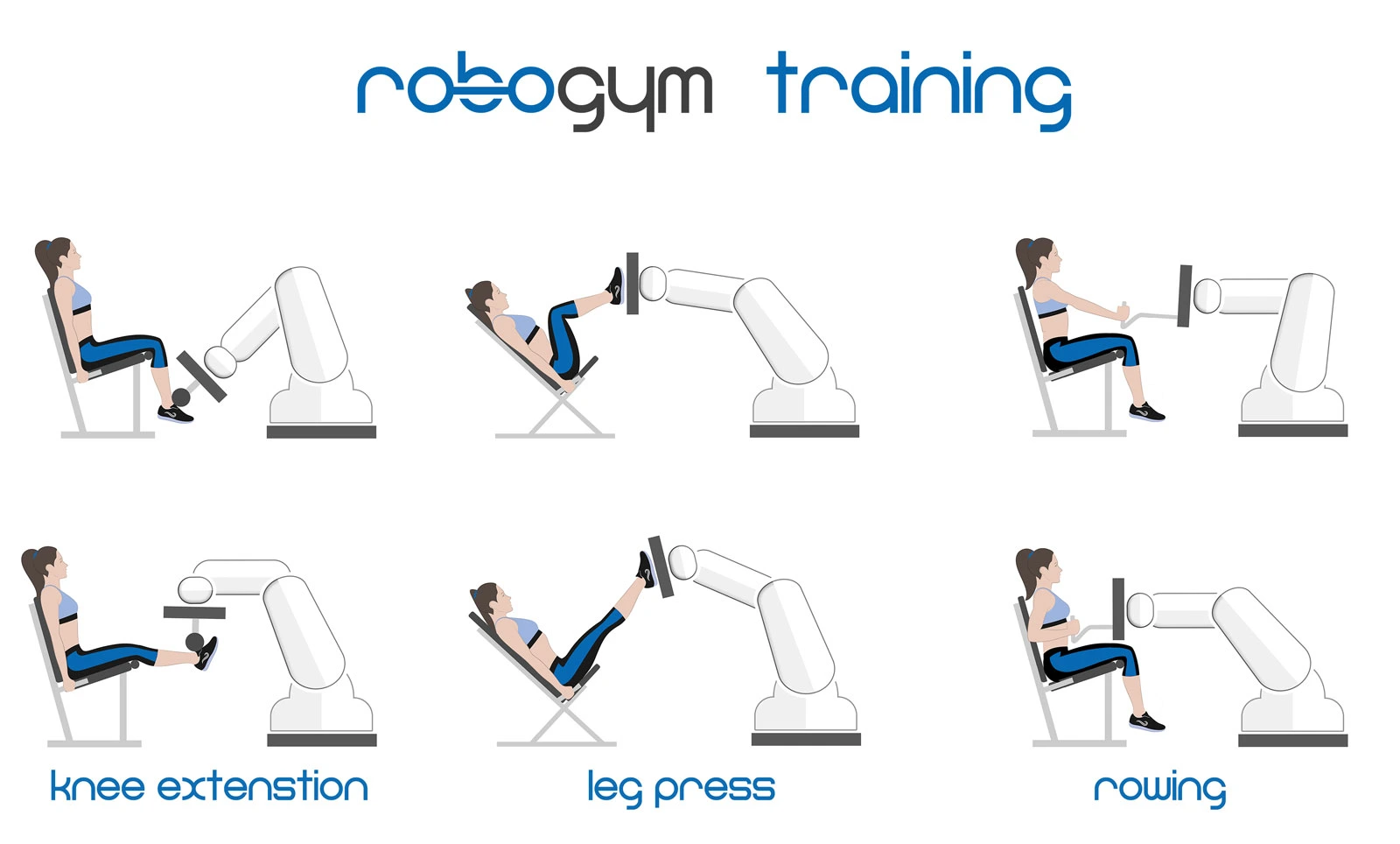
RoboGym combines a robotic arm with sensors and a biomechanical model of the user’s musculoskeletal system. During an exercise, sensors capture the athlete’s movement, and this data is compared against the biomechanical model to establish the individually defined range of motion for that exercise. The robotic arm then sets resistance and movement path accordingly, rather than relying on a manually configured program. This forms a control loop: movement data and physical capability inform the training parameters, the robotic arm executes the corresponding resistance and motion, and the resulting movement is measured again to adjust subsequent repetitions. Individual training parameters can be stored digitally and made available for later sessions. Because the robotic arm is in direct, load-bearing contact with the person training, the system’s control and safety architecture is designed specifically around this human-robot interaction.
Real-Time Biofeedback and Adaptive Training
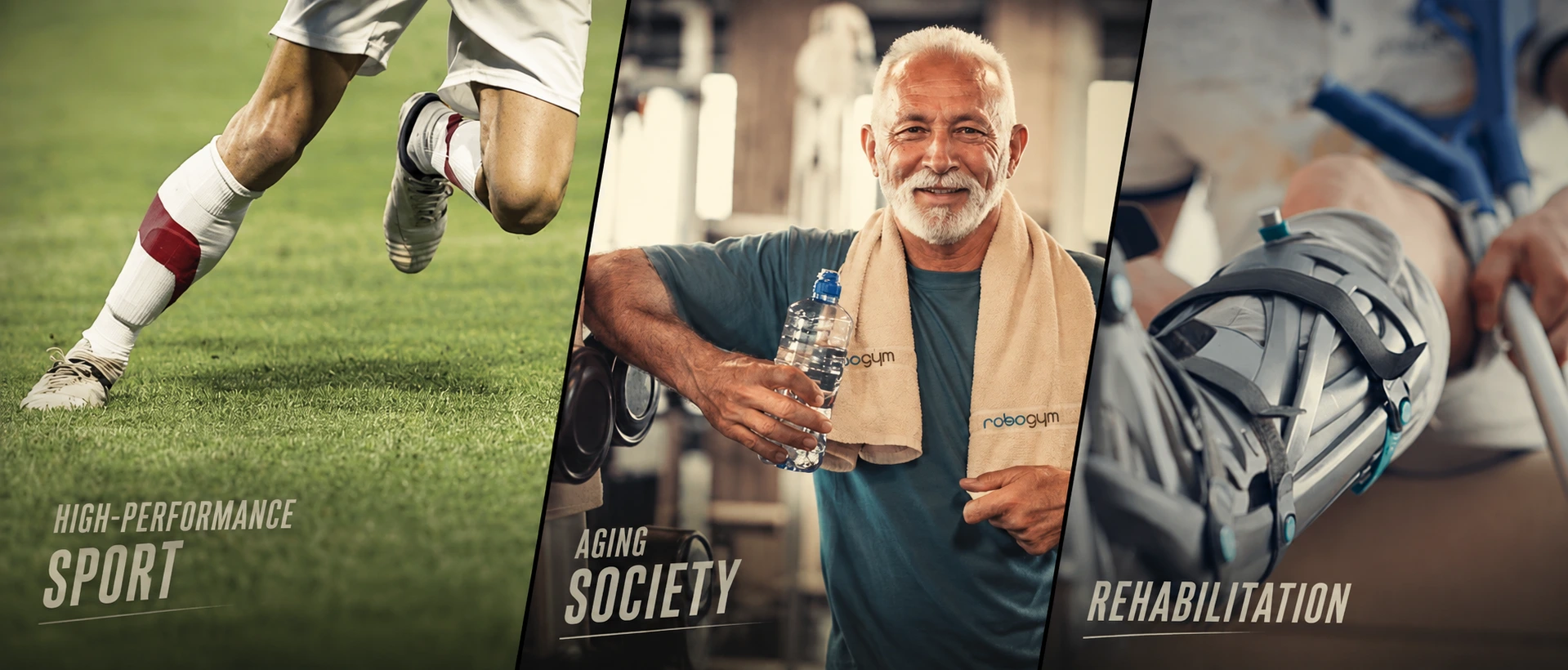
Because movement is measured continuously, RoboGym can provide feedback during the exercise itself rather than only afterward. This is used to indicate whether a movement stays within the individually defined range of motion for that session and to adjust resistance accordingly. In practice, this means the training load can reflect what a person can manage during a particular session rather than relying solely on a value fixed in advance. This is particularly relevant where physical condition varies between sessions, such as in rehabilitation-related or age-related training, since training parameters can be adapted without physically reconfiguring the equipment.
Robotic Training in Rehabilitation
RoboGym is designed to support individualized strength training during different phases of rehabilitation by adapting resistance and movement parameters to the user’s current muscular capabilities. As these capabilities change, the system’s control approach allows training parameters to be adjusted without physically reconfiguring the equipment. BEC Robotics describes RoboGym as a robotic strength-training system, reflecting its focus on controlled, adjustable training. The same adaptation principle used in RoboGym’s general training applications can therefore be applied to rehabilitation-related training, where appropriate training parameters may differ between sessions and between individuals.
Where Robotics Meets Sports Science
RoboGym was developed jointly by BEC Robotics and the German Sport University Cologne (Deutsche Sporthochschule Köln). KUKA supplied the robotic hardware used in the project, and the project received support from Germany’s Federal Ministry of Education and Research. The German Sport University Cologne’s contribution centered on biomechanical modeling of human movement, while BEC Robotics was responsible for the robotic system and its control architecture. Industrial automation projects rarely require this depth of biomechanical input, which is why the collaboration with a sports-science research institution was central to RoboGym’s development. Combining sports-science expertise in individualized training with robotics engineering capable of implementing these parameters in real time makes RoboGym an example of robotics applied beyond conventional industrial automation.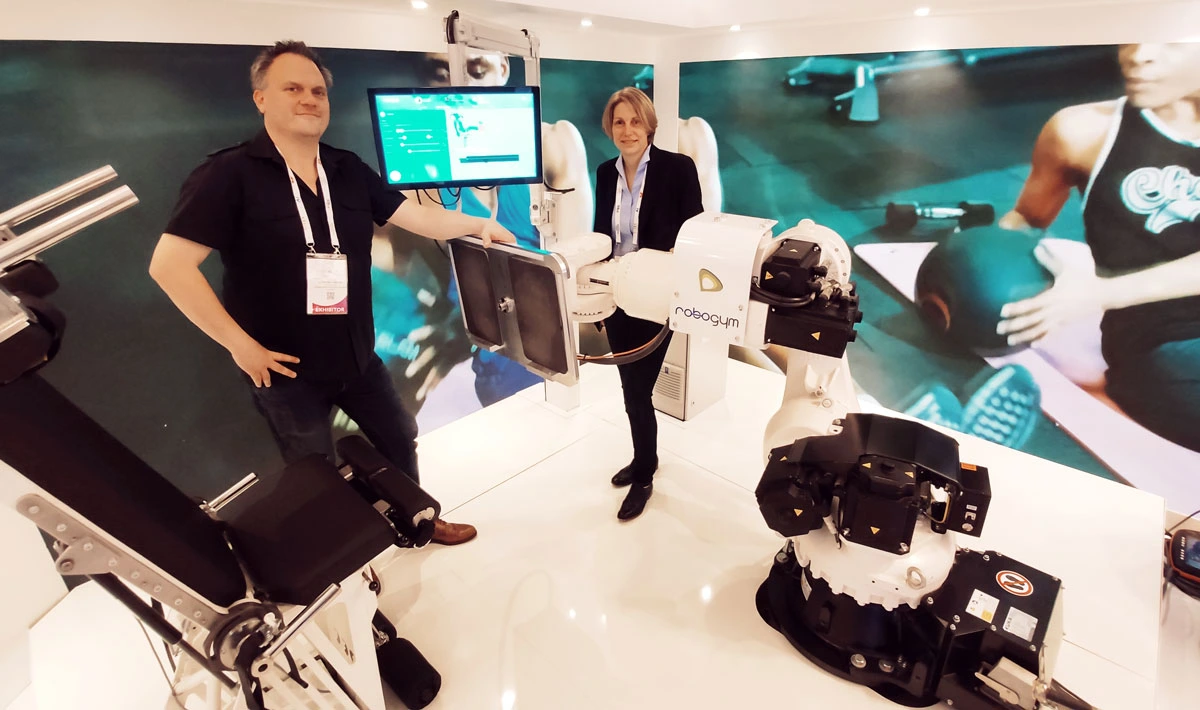
Dr. Björn Braunstein and Prof. Dr. Kirsten Albrecht - German Sport University Cologne
Robotics for Specialized Applications
RoboGym illustrates how robotic technology can be adapted to applications outside conventional industrial automation. By combining application-specific control, direct human-robot interaction and interdisciplinary input from sports science, the project shows how a robotic system can be configured for a task distinct from standard automation use cases while relying on the same underlying principles of sensor-based control and safety-oriented design. The combination of sensor-based control, safety-oriented human-robot interaction and close collaboration with domain specialists also appears across BEC Robotics’ medical and industrial robotics work, where each application requires the underlying robotic platform to be adapted to specific technical requirements.